
Types of Pharma Tablets: Understanding Different Formulations and Uses
Browse 3,500+ WHO-GMP certified PCD pharma companies offering monopoly franchise rights across all 28 states. Compare pricing, products & territory — for free.
Our expert connects you with the best PCD company within 24 hours
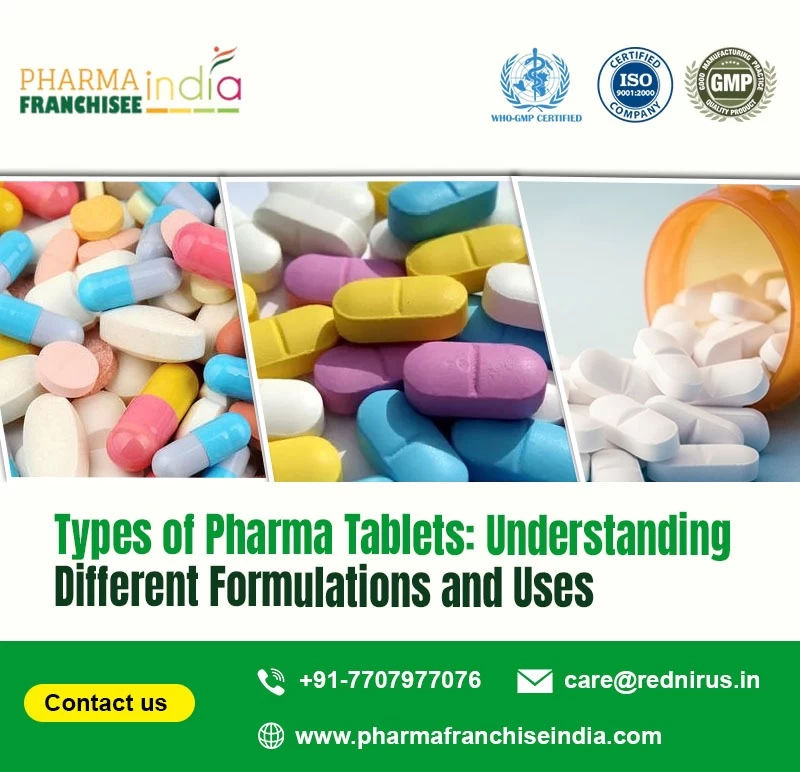
Most people think a tablet is just a tablet. You swallow it with water, it dissolves somewhere inside you, and the medicine does its job. Simple, right?
Not even close.
The pharma tablets sitting in your medicine cabinet represent wildly different technologies. Some dissolve in seconds. Others take hours to slowly release medication. Each type exists for very specific therapeutic reasons.
If you're running a pharma franchise or working in the PCD pharma franchise in India business, this knowledge matters. Doctors ask you about these differences. Patients want to know why tablets that look identical cost different amounts. Your ability to explain these distinctions affects how professional you appear.
Let me break down the main tablet types you'll encounter and why each one matters.
Regular Immediate Release Tablets
Start with the basics. Most tablets fall into this category.
Pop one in your mouth, swallow with water, and the tablet starts dissolving pretty much immediately once it hits your stomach. Within about 30 minutes to an hour, the medication has released completely and is moving into your bloodstream.
Tablets manufacturers produce more of these than any other type because they work perfectly fine for most situations. Got a headache? Take paracetamol. It dissolves fast, gets into your system quickly, and your headache fades within an hour.
Antibiotics mostly come this way too. When fighting an infection, you want medicine hitting the bacteria quickly, not trickling in slowly over eight hours.
The downside? These tablets don't last long in your system. The medicine peaks in your blood after an hour or two, then your body starts breaking it down. If you need consistent drug levels, you're taking tablets three or four times a day.
Extended Release - The Slow Approach
Extended release tablets look similar to regular ones, but inside they're completely different. A tablet manufacturing company making these uses special coatings or matrices that release medication slowly over many hours instead of dumping it all at once.
The medicine trickles into your system bit by bit—maybe over 8 hours, maybe 12, sometimes even 24 hours for once-daily formulations.
Why bother with this complexity? Two big reasons.
First, some medicines work way better when blood levels stay relatively steady. Blood pressure medications, for instance. Extended release keeps things more constant.
Second, convenience. Taking one pill daily beats taking the same medicine three times a day. Medication compliance is a huge problem in healthcare. People forget doses. They get busy. Once-daily dosing dramatically improves how reliably people actually take their medicine.
The pharmaceutical tablets market has moved tons of common drugs to extended release versions. Depression medications, diabetes drugs, pain medications for chronic conditions—all commonly available as extended release now.
Critical warning though: never crush or break extended release tablets. That special coating controlling the release? You've just destroyed it. The entire day's worth of medication dumps into your system at once. Best case, the medicine stops working properly. Worst case, overdose.
Enteric Coated - The Stomach Survivors
Some medications have a problem with stomach acid. Either the acid destroys the medicine before it can work, or the medicine irritates the stomach lining causing pain and damage.
Enteric coated tablets solve this with a special protective shell. This coating resists the harsh acidic environment of your stomach. The tablet passes through intact. Then when it reaches your intestines—which are less acidic—the coating dissolves and releases the medication.
Aspirin commonly comes enteric coated. Regular aspirin can really tear up your stomach if you take it daily. The enteric coating lets the aspirin do its job without wrecking your stomach lining.
Certain enzymes and probiotics absolutely need enteric coating. Stomach acid would destroy them completely before they reached the intestines where they're supposed to work.
Same rule as extended release: don't crush or chew these. Breaking that protective coating defeats the entire purpose.
These tablets sometimes confuse patients because they take longer to work than regular versions. That's intentional—the tablet needs time to travel through your stomach before releasing.
Chewable Tablets - Not Just for Kids
Chewable pharma tablets are what they sound like. You chew them up like candy rather than swallowing them whole.
Obviously popular for children's medications. Getting a five-year-old to swallow pills is often a nightmare. Give them a grape-flavored chewable tablet? Much easier.
But plenty of adults use chewables too. Antacids work great as chewables because chewing speeds up how fast they work. You want immediate relief from heartburn, not relief in 30 minutes.
Making good chewable formulations is actually challenging for tablets manufacturers. The tablet has to taste decent. It needs to break apart easily when chewed but stay solid in the bottle. And the medication has to survive being chewed without becoming ineffective.
Calcium supplements often come as chewables. Vitamins for both kids and adults. They're convenient for people who struggle with swallowing pills.
Sublingual and Buccal - Under-Tongue Specialists
These are the weird ones that confuse people.
Sublingual tablets go under your tongue. Buccal tablets go between your cheek and gum. Either way, you're not swallowing them. They dissolve right there in your mouth, and the medication absorbs directly through the tissue into your bloodstream.
This bypasses your entire digestive system. The medicine hits your bloodstream in minutes—sometimes seconds.
Why would you want this? Emergency situations, mainly.
Heart medication for angina attacks needs to work NOW, not in 30 minutes. Under the tongue, nitroglycerin tablets work within a minute or two. That speed can be lifesaving.
Some medications also get destroyed if they go through your stomach and liver. Sublingual administration gets them directly into circulation without passing through these destructive environments.
The tricky part? Patients have to use them correctly. You can't swallow. Can't drink water. The tablet has to sit there until completely dissolved.
Customer education becomes critical here. If someone doesn't understand how to use sublingual tablets properly, they might as well not be taking the medication at all.
Dispersible Tablets - Instant Liquid
Drop a dispersible tablet in water and it breaks apart quickly, creating a drinkable suspension within a minute.
These solve a practical problem: lots of people can't swallow tablets. Elderly patients with swallowing disorders. Stroke patients. Young children. For them, trying to swallow a solid pill creates choking risks.
Dispersible tablets give you the convenience of solid dosage forms—easy to store, stable, portable—with the ease of liquid administration when needed.
Pain relievers and fever reducers commonly come as dispersible tablets, especially for kids. Parents can mix them in water and the child drinks it easily.
Effervescent Tablets - The Fizzy Ones
Drop these in water and they fizz vigorously, dissolving completely into a bubbly drink.
The fizzing comes from a chemical reaction—usually citric acid and bicarbonate reacting with water to produce carbon dioxide bubbles.
The fizzing action speeds up how fast the tablet dissolves. You get a completely dissolved drink with no solid particles, which many people find more pleasant than swallowing pills.
The carbonation can make the drink taste better, masking medicinal flavors. For things people take daily like vitamins, the pleasant fizzy drink format improves compliance.
You see effervescent formulations mostly with supplements like vitamin C, multivitamins, calcium. Some pain relievers and antacids use the format too.
Orally Disintegrating Tablets (ODTs)
These tablets dissolve on your tongue within seconds without any water needed.
Maximum convenience. You can take medication anywhere—in a car, at work, in a movie theater—without needing water. For people with swallowing difficulties, these work perfectly because there's nothing to swallow.
Anti-nausea medications commonly use ODT format because people who are nauseated often struggle swallowing anything. The instant-dissolving format gets the medicine in without triggering more nausea.
Allergy medications, certain pain relievers, and some psychiatric drugs also come as ODTs. They're particularly useful for medications people might need to take unexpectedly when they're not at home.
Why This Matters for Your Business
If you're operating in the pharma franchise space, understanding these tablet types helps you practically.
First, you can answer customer questions knowledgeably. When a doctor asks why your extended release version costs more, you can explain the technology difference. When a patient asks if they can crush a tablet, you know which types can be crushed and which cannot.
Second, you understand storage requirements. Some formulations are more sensitive to humidity than others. Knowing this prevents inventory losses.
Third, you can guide product selection better. If someone needs chronic pain medication, suggesting extended release makes sense. If they need acute migraine relief, immediate release is better. Matching the formulation to the therapeutic need improves outcomes and builds customer trust.
The variety in pharmaceutical tablets isn't just companies showing off technology. Each formulation type solves specific therapeutic problems better than alternatives.
Understanding these differences transforms you from someone who just sells products into someone who provides genuine value through informed guidance. That's the difference between transactional business relationships and partnerships people maintain for years.

Author : Surinder Thakur
Surinder Thakur has closely worked in the PCD franchise field for more than 20 years. With a background in pharmaceutical marketing, he understands both medicine and the business behind it. Through Pharmafranchiseeindia.com, he shares practical and honest guidance to assist pharma professionals make better decisions.