
What Technologies Are Used by Modern Pharmaceutical Distributors in India?
Browse 3,500+ WHO-GMP certified PCD pharma companies offering monopoly franchise rights across all 28 states. Compare pricing, products & territory — for free.
Our expert connects you with the best PCD company within 24 hours
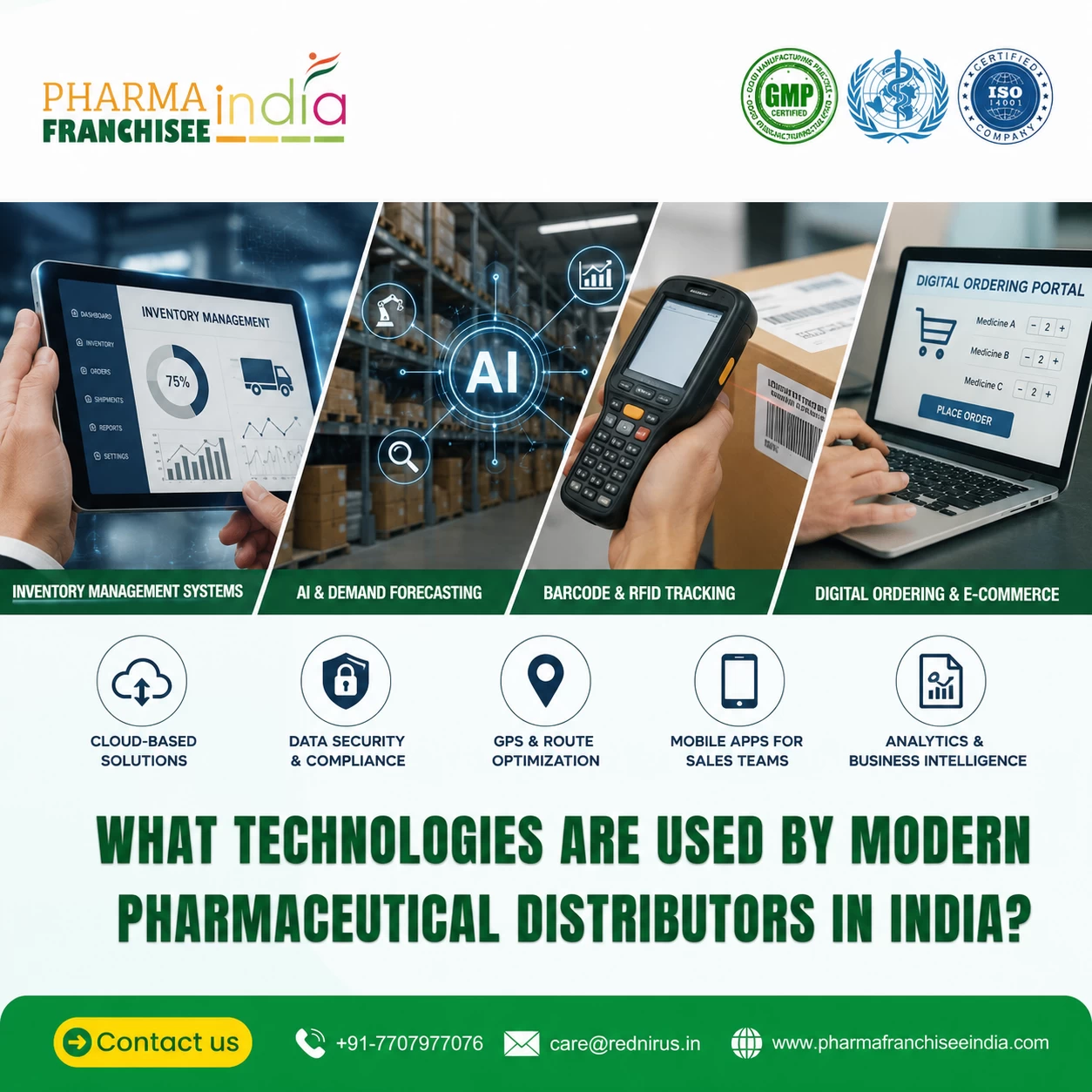
Tech adoption among pharmaceutical distributors in India isn't optional anymore. It's survival. Distributors still running everything on paper registers and phone calls? They're bleeding money and don't even realize it.
The gap between pharma distributors using technology versus those avoiding it widens daily. One group tracks every rupee, knows exactly what's selling, manages inventory without wastage. The other guesses constantly, discovers stock-outs after customers complain, finds expired products hiding in storage.
We're breaking down actual technologies medicine distributor operations use today. Not futuristic stuff. Real tools already deployed across India, from ₹50 lakh operations to ₹10 crore businesses.
Inventory Software That Actually Works
Forget fancy names. Pharmaceutical distribution companies need systems answering basic questions: What stock do we have? What's expiring soon? What should we reorder?
Tally dominates because it's everywhere. Accountants know it. Training costs nothing. Updates happen regularly. Does everything a medicine distribution company needs without massive learning curves.
Marg ERP gained ground recently. Pharmaceutical-specific features like batch expiry tracking, scheme calculations, doctor visit planning. Costs ₹15,000-40,000 depending on modules. Not cheap, but pays back fast through prevented wastage alone.
Some pharma distributors use Excel thinking they're saving money. False economy. Excel breaks with scale. No automatic alerts. No multi-user access without chaos. Formulas break mysteriously. Data gets accidentally deleted.
Cloud systems like Zoho Inventory or NetSuite appeal to growing operations. Access from anywhere. Automatic backups. Multiple warehouses sync automatically. Monthly subscription models (₹5,000-25,000) instead of large upfront software purchases.
The best system? Whichever one actually gets used consistently. Fancy software nobody understands helps nothing.
Barcode Scanning Changes Everything
Manually counting 5,000 stock items quarterly? Takes three people two days. Errors guaranteed. Pharmaceutical distributors in India scanning barcodes? One person, six hours, nearly zero errors.
Barcode guns cost ₹8,000-25,000. Thermal printers for labels run ₹15,000-40,000. Total investment under ₹50,000 eliminates countless manual errors and saves hundreds of hours annually.
RFID sounds impressive. Radio frequency tags read automatically without scanning each item individually. Walk through a warehouse with RFID reader, instantly count everything. Reality? Costs 10x more than barcodes. Only makes sense for very high-value products or massive warehouses.
Most medicine distributor businesses stick with barcodes. Proven technology, affordable, reliable.
Mobile Apps For Orders
Retailers calling orders verbally creates problems. Mishearing product names. Wrong quantities. Disputed orders. "I ordered 20, you sent 2!" Nobody knows who's right.
Mobile ordering apps eliminate these issues. Retailer selects products, quantities show instantly, schemes auto-calculate, confirmation happens digitally. Both parties have records.
Custom apps cost ₹2-8 lakhs to develop. Overkill for most. Off-the-shelf B2B ordering platforms work fine at ₹3,000-10,000 monthly.
WhatsApp Business became surprisingly effective. Pharmaceutical distribution companies create catalog listings, retailers browse and order through familiar WhatsApp interface. Zero training needed. Adoption rates near 100% because everyone already uses WhatsApp.
Automated confirmations, order tracking, delivery updates—all through WhatsApp. Not sophisticated, but it works brilliantly in tier-2 and tier-3 markets.
Route Planning Saves Serious Money
Delivery drivers choosing routes randomly waste fuel spectacularly. Pharma distributors with 4-5 delivery vehicles easily spend ₹40,000-70,000 monthly on fuel. Route optimization software cuts this 15-20%.
Google Maps helps basic route planning. Free. Decent for single-vehicle operations. Multiple vehicles with 20+ daily stops? Google Maps becomes inadequate.
Dedicated route optimization platforms like LogiNext, Locus, or FarEye handle complex scenarios. Multiple vehicles, different capacities, time-window deliveries, traffic patterns. Algorithms calculate optimal routes automatically.
Costs vary wildly. ₹5,000-50,000 monthly depending on vehicle count and feature needs. Sounds expensive until you calculate fuel savings plus increased delivery capacity from efficiency gains.
GPS tracking adds another layer. Vehicle locations visible real-time. Unauthorized detours become obvious. Retailers appreciate accurate delivery time estimates. Temperature sensors in vehicles provide cold chain documentation.
Basic GPS tracking runs ₹500-1,500 monthly per vehicle. Medicine distribution company operations handling temperature-sensitive products consider this mandatory, not optional.
Accounting Gets Complicated Fast
Pharmaceutical wholesale involves mind-numbing complexity. Different schemes for different products. Retailer-specific discounts. Credit limits varying by customer. Free goods calculations. GST variations.
Spreadsheets collapse under this complexity. One formula error creates cascading problems discovered months later during audits.
Tally handles pharmaceutical accounting reasonably well. Most accountants know it. GST compliance built-in. Inventory and accounting integrate smoothly.
Larger operations graduate to full ERP systems. SAP, Oracle, Microsoft Dynamics. Expensive (₹5-50 lakhs depending on scale) but handle complexity effortlessly once implemented properly.
Pharmaceutical distributors processing 500+ daily invoices need automation. Manual accounting becomes error-prone and impossibly time-consuming beyond certain transaction volumes.
Credit Management Prevents Disasters
Extending credit to retailers creates working capital challenges. Track poorly, and suddenly ₹15 lakhs sits outstanding with half the accounts overdue.
Credit management modules (available in most accounting software) track receivables automatically. Aging reports show who owes what for how long. Automatic alerts when accounts approach credit limits or payment deadlines pass.
Some systems auto-block orders when customers exceed credit limits or have overdue payments. Prevents emotional decisions ("They're good customers, let it slide") from creating bad debt accumulation.
Pharma distributors managing ₹20+ lakh monthly receivables need systematic tracking. Memory and goodwill don't cut it at scale.
Digital Payments Reduce Headaches
Cash handling creates problems. Theft risks. Counting errors. Bank deposit time. Reconciliation nightmares.
UPI integration through payment gateways costs minimal setup (₹5,000-15,000) and tiny transaction fees (0.5-1.5%). Benefits vastly outweigh costs.
Instant payment confirmation. Automatic reconciliation with accounting. Zero cash handling. Better working capital flow.
Some pharmaceutical distribution companies offer 1-2% discounts for digital payments. Still cheaper than cash handling costs plus working capital benefits from instant payment.
CRM Sounds Corporate But Works
Customer Relationship Management platforms track every retailer interaction. Purchase history, payment patterns, complaints, preferences, visit schedules.
Field staff access complete retailer profiles on mobile before visits. Previous conversations, pending issues, purchasing trends. Personalized engagement becomes possible instead of generic visits.
Zoho CRM, Salesforce, Pipedrive—options abound. ₹1,000-5,000 monthly per user. Medicine distributor businesses with 3+ field staff benefit significantly.
Automated follow-ups via email or SMS keep communication consistent. New product launches, scheme notifications, payment reminders—all scheduled automatically.
Analytics identify which retailers are growing, declining, or showing concerning payment patterns early enough to address issues proactively.
Temperature Monitoring For Compliance
Cold chain products need documented temperature maintenance. Manual logging? Unreliable. People forget. Records get fabricated.
Automated temperature loggers cost ₹3,000-12,000 per sensor depending on features. Continuous monitoring. Cloud upload. Automatic alerts if temperatures deviate.
Regulatory inspections demand proof of proper storage. Automated logs provide ironclad documentation. Manual registers raise questions.
Pharmaceutical distributors in India handling vaccines, biologics, or temperature-sensitive products consider automated monitoring essential compliance infrastructure.
Dashboards Make Decisions Easier
Good business intelligence platforms pull data from inventory, sales, accounting systems into visual dashboards. What sold yesterday? Which territories perform best? What margins look like by product category?
Manual reporting means requesting information, waiting for compilation, receiving outdated data. By the time reports arrive, conditions changed.
Real-time dashboards show current state constantly. Decisions happen based on actual data, not gut feelings or outdated reports.
Power BI, Tableau, Google Data Studio—visualization platforms transform raw data into understandable insights. Cloud-based options run ₹2,000-15,000 monthly depending on user count.
Pharmaceutical distribution companies processing significant data volumes need analytics. Flying blind with gut instinct works until it catastrophically doesn't.
What Small Operations Actually Need
Everything discussed sounds expensive and complex for someone running ₹30-40 lakh annual operations from a small warehouse.
Minimum viable tech stack for small medicine distributor:
-
Tally or Marg for inventory and accounting (₹15,000-30,000 one-time)
-
WhatsApp Business for orders (free)
-
Basic GPS tracking if using delivery vehicles (₹1,000/vehicle monthly)
-
Digital payment acceptance (minimal cost)
Total: Under ₹50,000 initial investment, ₹5,000-10,000 monthly ongoing.
This baseline eliminates major manual inefficiencies without breaking budgets.
Scale up as business grows. Add route optimization when running multiple vehicles. Implement CRM when field team expands beyond 2-3 people. Deploy analytics when data volume makes patterns hard to spot manually.
What's Actually Worth It
Not all technology delivers value for every business. Route optimization for single-vehicle operation? Wasteful. Advanced analytics for ₹25 lakh annual revenue? Overkill.
Match technology to actual problems. Stock expiry losses eating profits? Inventory management priority. Delivery costs too high? Route optimization focus. Receivables growing uncontrollably? Credit management necessity.
Pharma distributors succeeding with technology identify specific pain points, then deploy targeted solutions. Not buying technology because it sounds impressive.
The Adoption Reality
Biggest technology barrier isn't cost. It's change resistance. Staff comfortable with manual processes resist digital systems. "The old way works fine" becomes the excuse preventing improvement.
Implementation requires commitment. Training periods. Patience through adjustment phases. Insistence on consistent usage even when reverting to old methods seems easier.
Technology working requires people using it properly. Best software deployed poorly delivers nothing. Decent software used consistently delivers massive value.
Compare this to how pharma franchise or PCD pharma franchise operations evolved. Those adapting technology early gained edges. Those resisting got left behind competing on price alone.
Similar dynamics apply across pharma franchise company and pharma third party manufacturers relationships. Tech-enabled partners provide better service, respond faster, handle complexity smoothly.
We're watching pharmaceutical distribution technology transition from competitive advantage to basic requirement. Operate without it? Possible, but increasingly difficult maintaining margins and growth against competitors leveraging digital tools effectively.
The technology exists. Costs keep dropping. Question isn't whether to adopt, but when and which specific tools match your particular operation's needs and scale.
Read More: How to Choose the Best Injection Manufacturing Company Partner

Author : Surinder Thakur
Surinder Thakur has closely worked in the PCD franchise field for more than 20 years. With a background in pharmaceutical marketing, he understands both medicine and the business behind it. Through Pharmafranchiseeindia.com, he shares practical and honest guidance to assist pharma professionals make better decisions.