
How to Become Oncology Drug Distributors in India: Complete Guide
Browse 3,500+ WHO-GMP certified PCD pharma companies offering monopoly franchise rights across all 28 states. Compare pricing, products & territory — for free.
Our expert connects you with the best PCD company within 24 hours
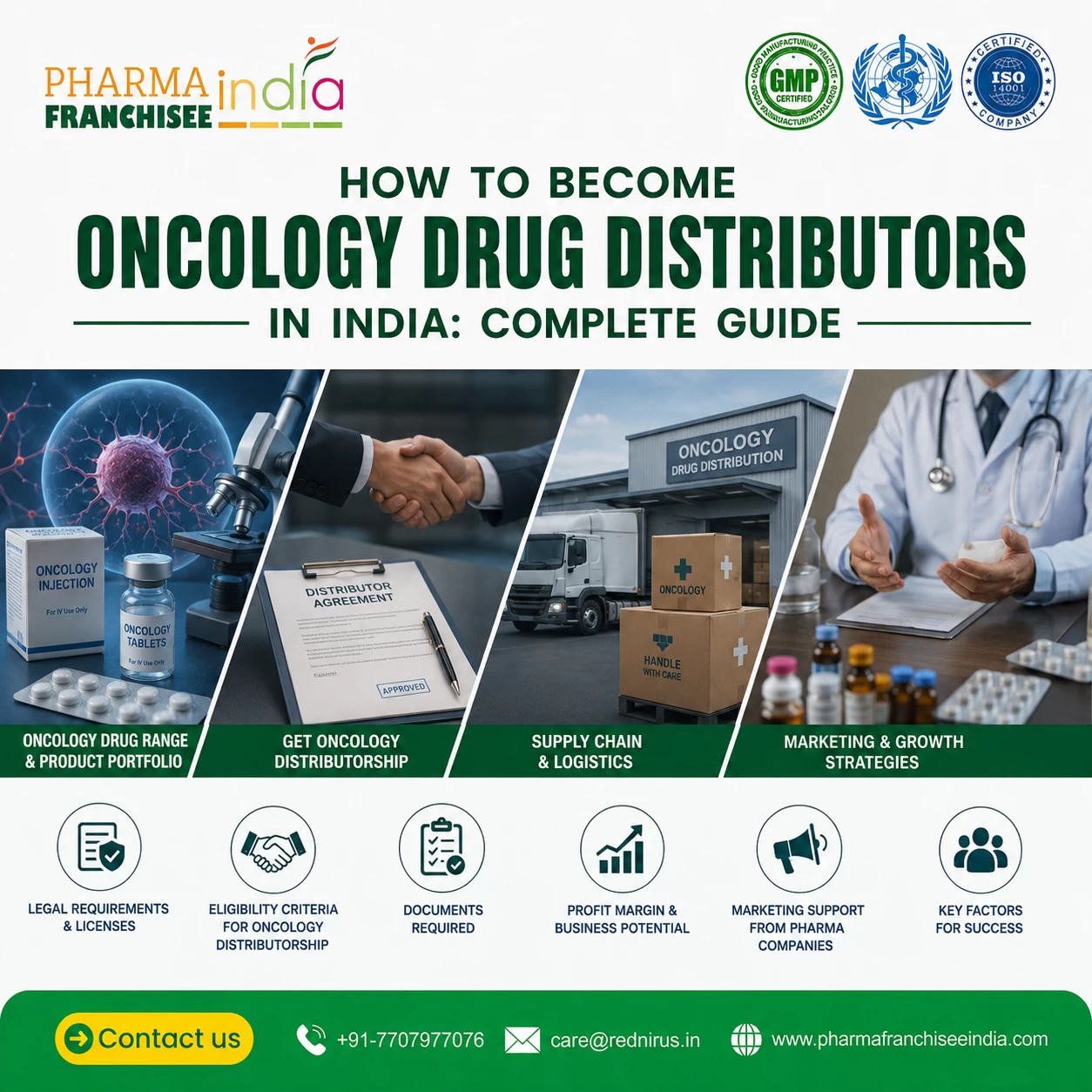
Oncology distribution attracts serious pharmaceutical entrepreneurs for good reason. Margins are substantially better than general pharma. Competition remains lower than saturated conventional distribution segments. Demand grows relentlessly as cancer cases increase annually across India.
But becoming oncology drug distributors in India isn't straightforward entry. Higher rewards come with higher complexity. Regulatory requirements are stricter. Infrastructure demands are more specific. Capital requirements are substantially larger. Manufacturer selection matters enormously.
Most people asking "how do I get into oncology distribution" receive vague answers about getting licenses and finding manufacturers. We're providing the complete picture—regulatory requirements, infrastructure needs, manufacturer partnerships, operational realities, and financial planning specific to oncology medicine distributors entering this specialized segment.
Understanding What You're Entering
Oncology distribution differs fundamentally from general pharma distributors operations. Understanding these differences prevents costly surprises.
The Complexity Premium
Cancer pharmaceutical companies manufacture some of the most technically complex products in the entire pharmaceutical industry. Targeted therapies requiring specific storage. Biological products with strict cold chain requirements. High-value products where single batch mishandling creates massive financial losses.
This complexity creates natural barriers to entry. Fewer qualified operators means less competition. Less competition means better margins and territory availability. The difficulty is the opportunity.
Patient Population Characteristics
Cancer patients represent unique distribution dynamics. Treatment protocols last months to years. Prescriptions are highly specialized from oncologists rather than general practitioners. Products often have no therapeutic substitutes—oncologists prescribe specific molecules, not interchangeable generics.
This creates predictable, recurring demand once you establish supply relationships with treatment centers.
Market Size Reality
India records approximately 14-15 lakh new cancer cases annually with numbers growing 8-10% yearly. Treatment penetration remains below 30% of actual need. Infrastructure expansion—new cancer hospitals, oncology day care centers, home care programs—creates distribution demand growing faster than patient numbers alone.
Oncology medicine distributors entering now position in genuinely expanding market rather than fighting for share in stagnant segments.
Licensing Requirements
Regulatory requirements for oncology distribution are more stringent than general pharmaceutical wholesale.
Drug Wholesale License
Standard wholesale drug license from state drug control authorities forms the foundation. Application process follows standard procedures—form submission, facility inspection, fee payment.
However, oncology products classified under Schedule H and Schedule H1 require additional compliance beyond basic wholesale licensing. Schedule H1 drugs need specific record keeping, maintaining prescription copies for 3 years, submitting monthly sales reports to drug control authorities.
Verify your state's specific requirements. Some states have additional provisions for cytotoxic drug handling beyond central regulations.
Cytotoxic Drug Handling Authorization
Chemotherapy agents and cytotoxic oncology products require specific handling authorization in many states. Storage facilities must meet safety standards protecting handlers from hazardous material exposure.
This isn't separate license in most states but requires documenting compliance with handling protocols during facility inspections.
GST and Business Registration
Standard GST registration mandatory. Cancer drugs attract specific GST rates—many essential oncology medicines are zero-rated or 5% GST, while supportive care products may attract higher rates.
Understand GST implications for your specific oncology product list before operational launch. Different rates across product categories complicate invoicing without proper accounting setup.
Infrastructure Requirements
Oncology drug distributors in India face infrastructure requirements substantially exceeding general pharmaceutical distribution.
Storage Standards
Temperature-controlled storage is non-negotiable for most oncology products. Biological therapies, targeted agents, and many supportive care products require 2-8°C refrigerated storage. Some specialty products need ultra-low temperature storage.
Minimum infrastructure requirements:
-
Refrigerated storage capacity: 10-15 cubic meters minimum
-
Backup power for uninterrupted cold chain: mandatory
-
Continuous temperature monitoring with automated alerts
-
Separate storage areas for cytotoxic versus non-cytotoxic products
-
Security systems appropriate for high-value inventory
Infrastructure investment for proper oncology storage: ₹8-15 lakhs depending on capacity and existing facility conditions.
Safety Equipment
Cytotoxic drug handling requires specific safety equipment protecting personnel:
-
Laminar flow cabinets for cytotoxic handling when required
-
Personal protective equipment—gloves, gowns, masks
-
Spill management kits
-
Sharps disposal systems
-
Staff training on cytotoxic exposure protocols
These requirements aren't optional recommendations. They're regulatory and ethical obligations protecting your team.
Security Infrastructure
High-value oncology products attract theft risks requiring serious security. CCTV coverage, access controls, alarm systems, and proper inventory reconciliation prevent theft and diversion.
Insurance for high-value pharmaceutical inventory adds another infrastructure layer.
Capital Requirements
Realistic capital planning prevents the most common failure mode—undercapitalization.
Initial Investment Breakdown
Genuine capital requirements for oncology distribution startup:
-
Storage infrastructure: ₹8-15 lakhs
-
Initial inventory: ₹15-30 lakhs (oncology products are high-value)
-
Licensing and registration: ₹30,000-50,000
-
Safety equipment: ₹2-4 lakhs
-
Working capital (4-6 months): ₹10-20 lakhs
-
Emergency reserve: ₹3-5 lakhs
Total realistic requirement: ₹38-74 lakhs depending on scale and territory.
Compare this against general pharma pcd companies entry requiring ₹4-8 lakhs. Oncology demands 10x higher capital minimum. This barrier is exactly why margins and opportunity remain superior.
Working Capital Intensity
Hospital payment cycles create working capital challenges. Government hospitals often take 60-120 days paying invoices. Private hospitals vary between 30-90 days. Meanwhile, manufacturers expect payment in 30-45 days.
This gap requires substantial working capital bridges. Factor this carefully. Many oncology distributors fail not from lack of orders but from working capital exhaustion managing slow hospital payments.
Manufacturer Selection
Choosing oncology medicine manufacturers partners correctly is arguably your most important decision.
Types of Manufacturers
Innovator Companies: Original research-based companies holding patents. Premium pricing, established clinical evidence, strong brand recognition among oncologists. Difficult to obtain distributorship as they maintain selective partner networks.
Generic Oncology Companies: Manufacturers producing off-patent oncology molecules at substantially lower prices. Larger market access opportunity, easier partnership entry, strong volume potential.
Biosimilar Manufacturers: Companies producing biosimilar versions of biological cancer therapies. Rapidly growing segment with significant margin opportunities as biological patents expire.
Cancer pharmaceutical companies operating in each segment offer different partnership dynamics. Evaluate based on product portfolio relevance to your target hospitals and territory oncologist prescription patterns.
Evaluation Criteria
Beyond standard quality verification applicable to any pharmaceutical manufacturer, oncology-specific evaluation includes:
Cold chain capability: Does the manufacturer maintain validated cold chain from production through dispatch? Can they demonstrate temperature monitoring records for shipped products?
Regulatory status: Any products facing import bans, quality alerts, or regulatory actions? CDSCO website provides searchable records.
Hospital formulary presence: Are their products included in major hospital formularies in your territory? Products lacking formulary inclusion face significant adoption barriers regardless of quality.
Patient assistance programs: Many oncology medicine manufacturers offer patient support programs subsidizing treatment costs. These programs drive prescription volumes and distributor sales simultaneously.
Getting Approved
Cancer pharmaceutical companies are selective about distribution partners. Approval requirements typically include:
-
Demonstrated adequate storage infrastructure meeting their specifications
-
Financial capacity documentation proving ability to carry required inventory
-
Territory analysis showing your market access and hospital relationships
-
Previous pharmaceutical distribution experience preferred
-
References from existing distribution relationships
Approach manufacturers with complete documentation package rather than casual inquiry. Treat applications similarly to pharma franchise applications but with additional technical documentation specific to oncology handling capabilities.
Hospital Relationship Development
Unlike general pharmaceutical distribution serving retail pharmacies primarily, oncology drug distributors in India focus predominantly on institutional supply.
Target Institution Mapping
Map your territory's cancer care infrastructure systematically:
-
Dedicated cancer hospitals and comprehensive cancer centers
-
Multi-specialty hospitals with oncology departments
-
Oncology day care centers
-
Radiation therapy centers
-
Home care service providers
Each institution has different procurement processes, formularies, and relationship requirements.
Procurement Process Navigation
Government hospitals procure through tender systems. Understanding tender processes, meeting qualification criteria, and competitive pricing strategy are essential skills for government supply.
Private hospitals use purchase committees and formulary systems. Building relationships with purchase managers, oncologists, and pharmacy directors creates supply opportunities outside pure price competition.
Oncologist Relationships
Unlike general pharma distributors focusing on broad prescriber bases, oncology distribution requires deep relationships with relatively few specialized oncologists.
Each oncologist represents substantial prescription volume. Relationship investment per prescriber justifies more time and resources than general medical representatives typically allocate. Scientific support, clinical literature, patient assistance program facilitation—these services differentiate serious oncology medicine distributors from commodity suppliers.
Operational Protocols
Daily operations require systematic protocols beyond general pharmaceutical distribution.
Receiving and Inspection
Every oncology product receipt requires rigorous inspection:
-
Temperature indicator verification for cold chain products
-
Batch and expiry documentation
-
Physical quantity verification
-
Visual inspection for damaged packaging
-
Documentation update in inventory system
Shortcuts during receiving create problems discovered later through patient complaints or regulatory audits.
Dispensing Controls
Prescription requirement compliance for Schedule H1 products means maintaining prescription copies, recording dispensing details, and submitting required reports to regulatory authorities.
These aren't optional compliance activities. Violations risk license suspension affecting your entire distribution business.
Adverse Event Reporting
Oncology product list items sometimes generate adverse events reported by healthcare providers. Distributors have responsibilities in pharmacovigilance systems—receiving adverse event reports, forwarding to manufacturers, maintaining records.
Understanding these obligations and fulfilling them properly protects license status and demonstrates professional standards expected from serious distributors.
Financial Management
Specialized financial management separates sustainable operations from those failing despite adequate sales.
Margin Reality
Oncology products offer margins ranging 15-35% depending on product type, competitive situation, and channel. Innovator products offer lower but predictable margins. Generic oncology products offer higher but more variable margins based on competition.
Pharma franchise margins in general pharmaceuticals rarely exceed 20%. Oncology regularly delivers 25-35% for established distributors with strong hospital relationships.
Payment Collection
Proactive receivables management is critical given hospital payment cycle lengths. Dedicated accounts management staff handling billing, follow-up, and dispute resolution prevents receivables from ballooning unmanageably.
Some distributors factor receivables through financial institutions for immediate liquidity at cost of 1-2% factoring fees. Worth considering when working capital constraints limit growth.
Building Specialized Expertise
Successful oncology drug distributors in India develop genuine expertise differentiating them from commodity operators.
Clinical knowledge about treatment protocols, supportive care requirements, and emerging therapies enables meaningful conversations with oncologists beyond transactional product pushing.
Regulatory expertise navigating complex compliance requirements provides value to hospital pharmacy teams managing their own compliance obligations.
This expertise accumulation takes time. But it creates competitive advantages impossible to replicate quickly—exactly what pharma PCD companies operating in commodity segments rarely achieve.
Read More: What Technologies Are Used by Modern Pharmaceutical Distributors in India?

Author : Surinder Thakur
Surinder Thakur has closely worked in the PCD franchise field for more than 20 years. With a background in pharmaceutical marketing, he understands both medicine and the business behind it. Through Pharmafranchiseeindia.com, he shares practical and honest guidance to assist pharma professionals make better decisions.